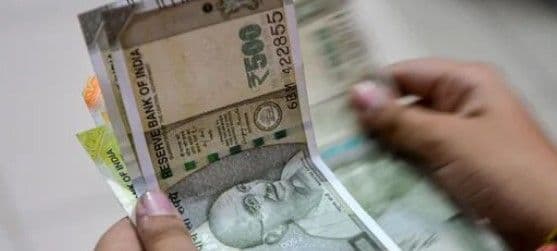
Rupee posts biggest single-day jump in 13 years — RBI's forex crackdown triggers sharp recovery
Thursday, April 2, 2026 — But experts warn the relief may be short-lived
Key Numbers at a Glance
Rupee Close
₹93.10
▲ Best close since ATL of ₹94.83
Day's High
₹92.82
▲ Intraday peak
Single-day Gain
~2%
▲ Biggest since Sept 2013
All-Time Low
₹94.83
▼ Hit last Friday
Fall since Iran war
−4.5%
▼ Since Feb 28, 2026
Fall in FY26
−11%
▼ Full year decline
What Happened — Point by Point
1. RBI fired two big weapons against speculators
The RBI announced two sets of forex restrictions in quick succession. On March 27, it capped banks' net open dollar positions at $100 million per day — limiting how much banks can bet on the rupee's direction. Then on April 1, it went further with two more rules targeting speculators hiding behind "hedging" trades.
2. The new rules — explained simply
Rule 1 — No re-entry after cancellation: If a company cancels a dollar hedge contract, it cannot re-enter the same trade immediately to profit from price swings. This stops traders from misusing hedging tools for pure speculation.
Rule 2 — No related-party forex deals: Banks are now barred from doing forex derivative contracts with their related companies or group entities. This closes a loophole where banks profited by buying dollar forwards cheaply in India and selling them at a premium abroad.
Rule 2 — No related-party forex deals: Banks are now barred from doing forex derivative contracts with their related companies or group entities. This closes a loophole where banks profited by buying dollar forwards cheaply in India and selling them at a premium abroad.
3. Why the rupee jumped so sharply
The RBI's moves forced traders who had bet against the rupee (short positions) to quickly buy rupees back to cover their bets — called short covering. This sudden burst of rupee buying pushed it up nearly 2% in a single session — the biggest one-day gain since September 2013.
4. Wednesday's global mood also helped
Trump's earlier hint at Iran negotiations had boosted risk sentiment on Wednesday, giving the rupee an extra push. But Thursday's aggressive Iran speech reversed that global optimism — making today's rupee gain driven almost entirely by RBI action, not global cues.
What Experts Are Saying
"Rupee is currently in uncharted territory. A lot of the movement now is dependent on regulatory moves. We expect the rupee to trade in a range of 92.50–93.50 until the April 10 deadline."
— Rajeev Pawar, Head of Treasury, Ujjivan Small Finance Bank
"The recovery appears more of a technical pullback after a sharp depreciation rather than a trend reversal. Near-term support is near 92.50 and resistance at 93.50."
— Jateen Trivedi, VP Research, LKP Securities
"The fundamental flow picture for INR still points towards FX weakness. Once the dust settles on these regulations, it is still a good chance to buy USD/INR at lower levels."
— MUFG Global Markets Research
Near-Term Ranges to Watch
Near-term support Buy zone for importers
₹92.50 – ₹93.00
Near-term resistance
₹93.50
Broader expected range Mecklai Fin
₹91.20 – ₹96.00
Worst case if oil spikes MUFG warning
₹97.50+
Key deadline to watch
April 10, 2026
Why the Outlook Remains Uncertain
3 reasons the rupee is still under pressure
1. FPI selling continues: Foreign portfolio investors have been consistently selling Indian assets. The rupee has fallen 11% in FY26 due to continuous FPI outflows — and that trend has not reversed.
2. Crude oil stays high: Brent at $108/barrel means India's import bill keeps rising. More dollars needed to buy oil = more pressure on the rupee. If oil hits $115+, the rupee could slide to ₹97.50 or beyond.
3. RBI's moves may reduce market liquidity: While the curbs stop speculation, they could also widen the gap between India's onshore and offshore currency markets over time — making the rupee harder to trade and potentially more volatile.
2. Crude oil stays high: Brent at $108/barrel means India's import bill keeps rising. More dollars needed to buy oil = more pressure on the rupee. If oil hits $115+, the rupee could slide to ₹97.50 or beyond.
3. RBI's moves may reduce market liquidity: While the curbs stop speculation, they could also widen the gap between India's onshore and offshore currency markets over time — making the rupee harder to trade and potentially more volatile.
Big Takeaway
Today's rupee jump is real — but it was engineered by the RBI, not driven by fundamentals. The underlying problems — high oil prices, FPI outflows, Iran war uncertainty — have not gone away. Watch April 10 when RBI's NOP cap kicks in fully, and the RBI MPC rate decision next week for the next big signal. For importers: ₹92.50–93.00 is considered a good range to cover payment liabilities for the next 2 months.
SEBI Regulatory Disclaimer — Please Read Carefully
This publication is strictly for educational and informational purposes only. It does NOT constitute investment advice, a research report, a solicitation, or a recommendation to buy or sell any securities, currencies, commodities, or any other financial instruments.
This publication is NOT registered as a Research Analyst under SEBI (Research Analysts) Regulations, 2014, and makes no claim to be so. Views and opinions expressed are based on publicly available information and are subject to change without notice.
All data is sourced from publicly available information and is believed to be accurate at the time of publication. However, no warranty of accuracy, completeness, or timeliness is given or implied.
Investments in securities markets, currencies, and commodities are subject to market risks. Past performance is not indicative of future results. The value of investments may rise or fall. Currency markets carry additional risks including regulatory, geopolitical, and liquidity risks.
Readers are strongly advised to consult a SEBI-registered investment adviser, a certified financial planner, or a qualified financial professional before making any investment or financial decisions.
The publisher, editors, and contributors shall not be held liable for any direct, indirect, incidental, or consequential loss arising from reliance on the content of this publication.
This publication is NOT registered as a Research Analyst under SEBI (Research Analysts) Regulations, 2014, and makes no claim to be so. Views and opinions expressed are based on publicly available information and are subject to change without notice.
All data is sourced from publicly available information and is believed to be accurate at the time of publication. However, no warranty of accuracy, completeness, or timeliness is given or implied.
Investments in securities markets, currencies, and commodities are subject to market risks. Past performance is not indicative of future results. The value of investments may rise or fall. Currency markets carry additional risks including regulatory, geopolitical, and liquidity risks.
Readers are strongly advised to consult a SEBI-registered investment adviser, a certified financial planner, or a qualified financial professional before making any investment or financial decisions.
The publisher, editors, and contributors shall not be held liable for any direct, indirect, incidental, or consequential loss arising from reliance on the content of this publication.